


The Same Island, Four Different Souls
Imagine stepping off a plane in Sapporo and breathing air so crisp it feels like the first sip of cold water after a long jeepney ride. Hokkaido does not greet you with one face. It greets you with four—each tied to the turn of the earth, each carrying a different scent, color, and rhythm.
For Filipino travelers used to two seasons of sun and rain, Hokkaido's dramatic annual cycle can feel like visiting four countries in one. Whether you are drawn to the purple horizons of Furano in July or the glowing ice sculptures of Sapporo in February, timing your trip shapes everything: the roads you drive, the dishes you taste, the conversations you have. This guide breaks down what each season offers, how to dress for it, where to eat, and how Mesho's Best of Hokkaido 2027 package weaves these moments into an eight-day journey.
Spring: The Quiet Thaw (Late April to May)
Spring arrives late in Hokkaido. While Tokyo is already shedding cherry blossoms, Sapporo is still waking up. Snow melts into rivers. Farmers begin preparing fields that will later explode with color. This is the island's most understated season—and perhaps its most honest.
What You Will See
- Matsumae Park in southern Hokkaido holds late-blooming cherry blossoms around early May, far less crowded than Honshu.
- The Kushiro Wetlands begin to thaw, drawing Japanese red-crowned cranes back to the marshlands.
- Roadside snow walls along mountain passes—like the Hakkoda Mountains in Aomori-accessible areas—create surreal corridors of white.
What to Eat
Spring means asparagus and bamboo shoots appearing on seasonal menus. Try them simply grilled at a izakaya in Susukino, Sapporo's nightlife quarter. Ramen shops also start transitioning from rich miso broths to lighter salt-based soups.
Practical Notes for Filipinos
Temperatures hover between 8°C and 15°C. A thermal layer under a windproof jacket is essential. Mornings and evenings still carry winter's bite. If you run cold, pack lightweight merino wool base layers—they regulate temperature better than cotton and dry overnight in hotel rooms.
Summer: Lavender, Dairy, and Endless Light (June to August)
This is the season that dominates postcards. From late June through July, Furano and Biei become a tapestry of purple, red, and gold. Fields of lavender, poppy, and sunflower roll across hills so vividly they look painted.
The Furano Experience
Farm Tomita in Nakafurano is the most famous lavender destination, and for good reason. But arrive early—before 9:00 AM—to avoid tour bus crowds. For a quieter alternative, Shikisai-no-Oka in Biei offers panoramic flower fields with fewer visitors and stunning mountain backdrops.
Summer evenings in Hokkaido are long. Sunset stretches past 7:00 PM, giving you extended hours to explore. The Sapporo Summer Festival in Odori Park runs through July and August, with beer gardens, food stalls, and live music under fading light.
Summer Flavors
- Hokkaido dairy is legendary. Try soft-serve ice cream made with milk from Tokachi farms—creamier and less sweet than what you find in Manila.
- Melons from Yubari and Furano fetch premium prices for good reason. Order a slice at a fruit parlor in Sapporo Station.
- Genghis Khan (Jingisukan) lamb barbecue becomes a social ritual. Diners grill thinly sliced lamb and vegetables on a dome-shaped skillet. Try it at Daruma or Matsuo Jingisukan in Sapporo.
What to Wear
Daytime temperatures range from 20°C to 26°C—comfortable, but UV intensity is high. Bring a wide-brim hat, sunscreen, and a light long-sleeve layer. Afternoon thunderstorms are common; a compact umbrella fits easily into a daypack.
Autumn: Crimson Horizons (September to October)
If summer is loud, autumn is contemplative. By mid-September, the forests of Daisetsuzan National Park begin turning. By October, entire mountainsides ignite in red, orange, and gold. This is the season photographers and hikers wait for.
Where to Chase the Colors
- Jozankei Onsen, just an hour from Sapporo, combines hot springs with riverside maple forests.
- Lake Toya offers mirror-calm waters framed by volcanic peaks and autumn foliage.
- The Noboribetsu Jigokudani ("Hell Valley") steams under golden canopies—a haunting, beautiful contrast.
Autumn on the Plate
Autumn brings sanma (Pacific saury) grilled whole with salt, served at casual restaurants across Sapporo. It also marks the beginning of matsutake mushroom season, prized for its earthy aroma in rice dishes and clear soups. For a warm, filling meal, seek out soup curry—a Sapporo-born dish of spiced broth with vegetables, meat, and a side of rice. Garaku near Odori Park and Soup Curry G request in Susukino are local favorites.
Practical Notes
Temperatures drop from 18°C in September to around 10°C by late October. Layering is critical. A fleece mid-layer plus a waterproof shell handles most days. Typhoon remnants occasionally bring rain, so waterproof footwear matters.
Winter: Snow Festivals and Onsen Serenity (December to February)
Winter defines Hokkaido for many travelers. Snow begins in earnest by December and blankets the island through February. The landscape transforms into something almost Arctic—silent, vast, and impossibly clean.
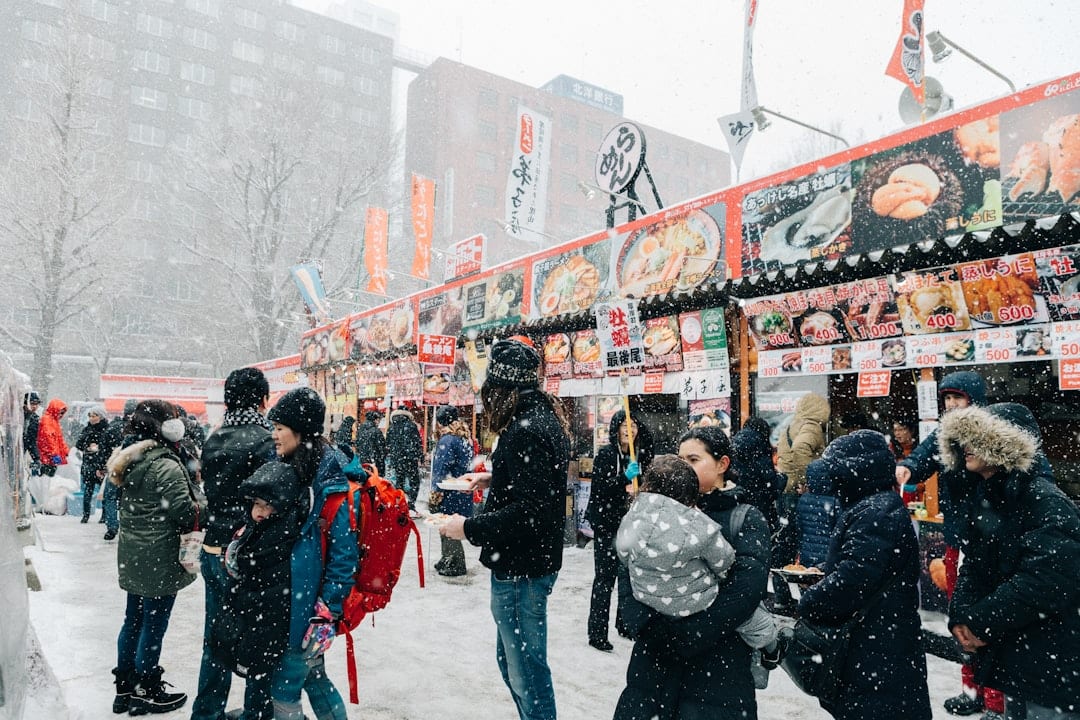
Sapporo Snow Festival — Odori Park illuminated ice sculptures
The Sapporo Snow Festival
Held every February, the Sapporo Snow Festival draws millions to Odori Park and the Susukino district. Massive snow and ice sculptures—some reaching 15 meters—are lit after sunset, creating an otherworldly glow. The 2027 festival will likely run during the first half of February. If your Mesho tour aligns with these dates, expect evenings spent wandering between glowing castles and detailed character carvings, cup of hot amazake in hand.
Beyond the City
- Niseko and Rusutsu offer powder skiing ranked among the best in the world—dry, light snow that feels like floating.
- Blue Pond (Aoiike) in Biei freezes into an alien landscape of white birch and milky blue ice.
- Abashiri drift ice cruises let you sail through frozen seawater off the Okhotsk coast—an experience few Southeast Asian travelers ever witness.
Winter Wellness for Filipinos
If you have never experienced sub-zero temperatures, Hokkaido winter is a shock. Daytime highs in Sapporo sit between -3°C and -7°C. Wind chill makes it feel colder.
Essential clothing: thermal base layers (Uniqlo Heattech or merino wool), a down jacket rated to at least -10°C, insulated waterproof boots with grip soles, wool socks, touchscreen gloves, and a balaclava or scarf to cover your face. The dry cold cracks lips and skin—bring heavy moisturizer and lip balm. Drink more water than you think you need; heated indoor air dehydrates quickly.
Onsen Etiquette
After a day in the snow, sinking into a rotenburo (outdoor hot spring) while snowflakes land on your hair is a memory you will carry forever. Remember: wash thoroughly before entering the bath, keep towels out of the water, and no swimming attire. Tattoos are increasingly accepted at tourist-friendly onsen, but calling ahead confirms policy.
Ainu Heritage: Listening to the Original Voice
Before Japanese settlers arrived, Hokkaido was Ainu Mosir—"the land of the humans." The Ainu people hunted, fished, and practiced a spiritual worldview centered on respect for fire, water, and animal spirits. Today, Ainu culture is experiencing a careful revival after centuries of suppression.
Where to Learn Respectfully
- Upopoy National Ainu Museum and Park in Shiraoi, opened in 2020, is the most comprehensive introduction. Exhibits cover Ainu language, craftsmanship, and spiritual practice without romanticizing or diluting the history of discrimination.
- Nibutani Ainu Cultural Museum in Biratori offers deeper context on local Ainu communities and traditional attus robe weaving.
- In Sapporo, the Ainu Culture Promotion Center (Sapporo Pirka Kotan) hosts dance performances and woodcarving demonstrations.
"Approach Ainu heritage as a guest, not a spectator. Listen to the stories, support local artisans by purchasing authentic carved goods, and avoid treating cultural performances as photo opportunities alone."
Mesho's itinerary includes time at Upopoy, allowing travelers to engage with Ainu history thoughtfully rather than rushing through a checklist.
What to Eat: Hokkaido on a Plate
Hokkaido's food identity is shaped by cold seas, rich soil, and dairy herds grazing on volcanic pasture. For Filipinos, the flavors feel familiar in their heartiness—soups, grilled meats, and rice bowls—yet distinct in their restraint and ingredient quality.
| Dish | Where to Find It | What to Expect |
|---|---|---|
| Soup Curry | Garaku, Sapporo Station area | Spiced broth with seasonal vegetables and chicken or pork; rice served separately |
| Seafood Donburi | Nijo Market, Sapporo | Rice topped with salmon roe, sea urchin, and crab—eaten for breakfast |
| Miso Ramen | Sumire, Sapporo Susukino | Rich, buttery miso broth with corn and butter toppings—born here, not imported |
| Jingisukan | Daruma, Sapporo | Lamb and vegetables grilled on a domed skillet; social, hands-on dining |
| Dairy Soft-Serve | Farm Tomita, Furano | Ultra-creamy milk soft-serve, best enjoyed while overlooking flower fields |
Budget roughly ¥1,200 to ¥2,500 per meal (₱450 to ₱950) at mid-range restaurants. Convenience store meals ( Lawson, 7-Eleven, FamilyMart) are surprisingly high quality and cost under ¥600 (₱230).
The 8-Day Balance: Nature, Culture, and Downtime
One of the most common mistakes travelers make in Hokkaido is trying to cover too much ground. Distances are deceptively large. A well-paced itinerary respects the island's scale.
Mesho's Best of Hokkaido 2027 package is structured around an 8-day rhythm that alternates active exploration with restorative pauses:
- Days 1–2: Sapporo orientation, Nijo Market breakfast, Odori Park, and an evening in Susukino.
- Days 3–4: Furano and Biei flower fields (summer) or autumn foliage drives (fall), with farm visits and dairy tastings.
- Day 5: Ainu cultural immersion at Upopoy in Shiraoi.
- Days 6–7: Onsen retreat in Jozankei or Noboribetsu, with optional day trips to Lake Toya.
- Day 8: Departure buffer with last-minute shopping at Tanukikoji or Sapporo Station.
This pacing prevents the fatigue that comes from constant hotel changes. You settle in, breathe, and actually absorb what you are seeing.
What to Wear: A Filipino's Seasonal Survival Guide
Filipinos are not built for dry cold. The good news: preparation replaces discomfort with confidence. Here is a season-by-season packing framework:
| Season | Temperature | Essential Items |
|---|---|---|
| Spring | 8°C to 15°C | Thermal base layer, windproof jacket, light scarf, waterproof shoes |
| Summer | 20°C to 26°C | Sun hat, UV sunscreen (SPF 50+), light long sleeves, compact umbrella |
| Autumn | 10°C to 18°C | Fleece mid-layer, waterproof shell, warm socks, beanie |
| Winter | -7°C to -3°C | Down jacket (-10°C rated), thermal leggings, insulated boots, gloves, balaclava, moisturizer |
Health note: The dry winter air affects sinuses and skin. Carry saline nasal spray, drink water constantly, and apply moisturizer after every bath. If you have asthma or sensitive respiratory systems, the sudden temperature shifts between heated indoors and freezing outdoors can trigger symptoms—carry your medication and transition gradually.
Money tip: Hokkaido is largely cash-based outside major hotels and department stores. Withdraw yen at 7-Eleven ATMs using a Philippine debit or credit card—convenience stores are everywhere. Budget roughly ₱6,000 to ₱10,000 per day for meals, local transport, and entry fees, excluding accommodation.
Planning Your Trip? Mesho Can Help
Choosing the right season is only the first step. Mesho's Best of Hokkaido 2027 package handles the details—hotels, domestic transport, curated experiences, and local guides—so you focus on the moments that matter.
Whether you want to walk through lavender under a July sun or stand before glowing ice sculptures in February, we will align your dates with Hokkaido's seasonal soul.
Quick Summary: When Should You Go?
- Summer (June–August): Best for flower fields, dairy tours, and festivals. Book early—Furano hotels fill months ahead.
- Autumn (September–October): Best for foliage, photography, and quieter onsen retreats. Weather is crisp but manageable.
- Winter (December–February): Best for snow festivals, skiing, and surreal frozen landscapes. Requires serious cold-weather gear.
- Spring (Late April–May): Best for travelers who dislike crowds and want to see Hokkaido waking up. Less dramatic, more intimate.
Related Reading
- → Best of Hokkaido 2027 — Full Tour Itinerary and Inclusions
- → Japan Visa Requirements for Philippine Passport Holders
- → First-Timer's Guide to Japanese Onsen Etiquette
Ready to Experience Hokkaido?
Hokkaido rewards the traveler who arrives with curiosity and a willingness to adapt. The island asks you to slow down, dress for the weather, and listen—to Ainu stories, to the hush of snowfall, to the hum of bees in a lavender field.
Let Mesho curate your journey. We will match you to the right season, the right pacing, and the right experiences—so your first step onto Hokkaido soil feels like coming home to something extraordinary.
Author's Note from Grace Villareal: I have walked Furano's lavender rows at 6:00 AM, sipped amazake at the Sapporo Snow Festival, and sat in silence at Upopoy listening to Ainu elders speak about fire and memory. Hokkaido is not a destination you rush. It is a place you return to—in your mind, long after your flight home. If you are weighing summer against winter, my advice is simple: pick the season that scares you a little. That is where the story begins.


