


There is a moment on the Sea of Galilee when the early morning light turns the water into liquid gold, and the shoreline of Capernaum falls silent except for the wind. For a Filipino Catholic pilgrim, this is not merely a scenic view. It is the landscape where Jesus called Peter, Andrew, James, and John from their nets. It is the waters He calmed, the villages He taught, and the path Mary Magdalene once walked. Standing on those basalt stones, many pilgrims tell me they feel something shift in their chest—a quiet certainty that the Gospels are not just stories read under fluorescent chapel lights, but events that happened on real soil, under real sun.
This guide is written for the devout Filipino traveler preparing for a Holy Land pilgrimage. Whether you are already booked on the PATHWAYS 2026 12-day itinerary or still discerning the journey, you will find here both the reverence these sites deserve and the practical clarity you need to walk them well.
The Biblical Heart of the Galilee
The northwestern shore of the Sea of Galilee is dense with Gospel events. Unlike the crowded streets of Old Jerusalem, the lakeshore offers space to breathe, pray, and absorb. Three sites anchor every meaningful visit: Capernaum, Magdala, and the Mount of Beatitudes.
Capernaum: Jesus' Ministry Headquarters
Capernaum—Kfar Nahum in Hebrew, the "Village of Nahum"—served as the operational base for Jesus' public ministry. The Gospel of Matthew calls it "his own city" (Matthew 9:1). Here, Jesus taught in the synagogue, healed the centurion's servant, and restored Peter's mother-in-law. The ruins you will walk through are authenticated archaeological remains: a fourth-century white limestone synagogue built atop the basalt foundations of the first-century synagogue where Jesus likely stood.
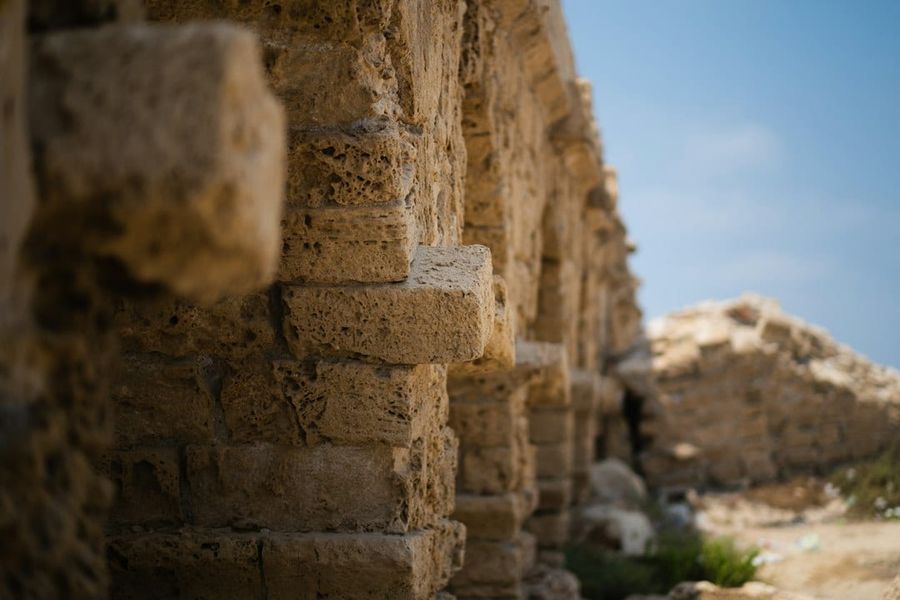
The ancient synagogue at Capernaum, built atop the foundations where Jesus taught
Adjacent to the synagogue, the Franciscan archaeological site preserves the remains of what tradition identifies as the house of Simon Peter. A modern octagonal church hovers above it on pillars, allowing visitors to look down through glass floors at the sacred foundations below. I always tell my groups to pause here. Touch the cool basalt. Read Mark 1:29-31 slowly. This is where the divine entered ordinary domestic life.
Magdala: Home of Mary Magdalene
Only a ten-minute drive south of Capernaum lies Magdala, the birthplace of Mary Magdalene. Rediscovered in 2009 during construction of a guesthouse, this active archaeological park has rapidly become one of the most spiritually moving stops on the Galilee circuit. The centerpiece is the Magdala Stone, a carved block from a first-century synagogue bearing menorah imagery—one of the oldest such representations found in Israel.
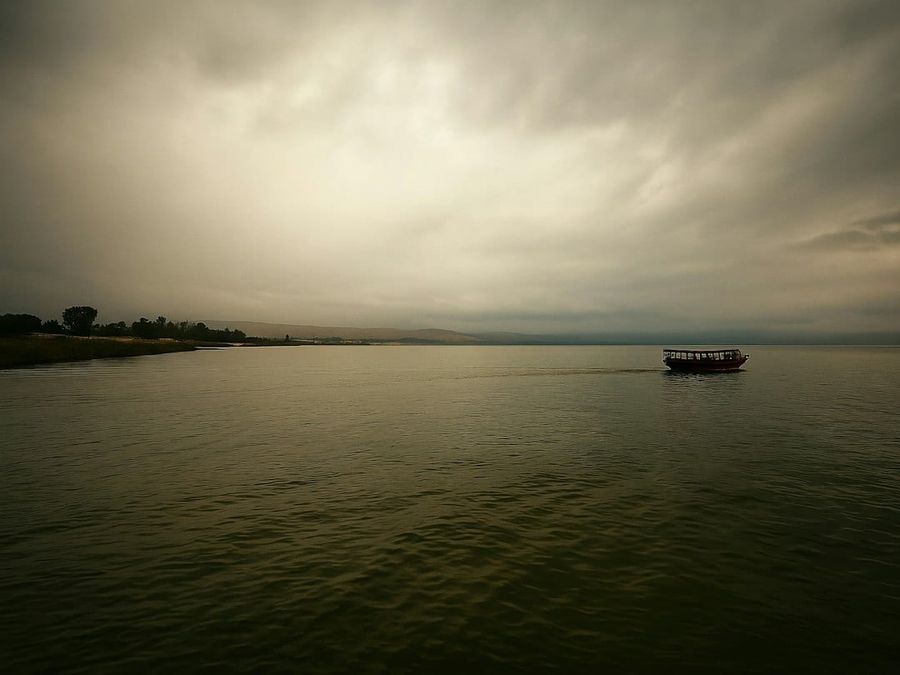
The archaeological park and waterfront at Magdala, hometown of Mary Magdalene
The Duc in Altum church on site offers one of the most beautiful prayer spaces in the Holy Land. Its chapel at water level, the Boat Chapel, features an altar positioned before a large window that frames the Sea of Galilee like a living painting. Filipino pilgrims often choose this spot for the rosary. The acoustics are gentle, and the view places you precisely where the first disciples cast their nets.
Mount of Beatitudes: The Sermon on the Mount
Rising above the northwest shore, the Mount of Beatitudes is traditionally recognized as the site of the Sermon on the Mount (Matthew 5-7). The gardens of the Church of the Beatitudes are meticulously maintained, offering shaded terraces where groups can read the Beatitudes aloud. Arrive early. By 9:00 AM, bus groups begin to crowd the overlook. The view from the top sweeps across the entire lake—from Tiberias in the south to the Golan Heights in the northeast. It is the perfect place to understand why Jesus chose this hillside as His pulpit.
Practical Pilgrim Essentials
Reverence and preparation go hand in hand. The Galilee is more relaxed than Jerusalem, but these are still consecrated grounds. Here is what every Filipino pilgrim should know before stepping onto the lakeshore.
Dress Code and Modesty
- Shoulders and knees must be covered at all times. This applies to both men and women. Capernaum and Magdala are active archaeological and ecclesiastical sites, and staff will turn away visitors in shorts or sleeveless tops.
- Wear comfortable closed-toe shoes with grip. The basalt stone at Capernaum is ancient, uneven, and surprisingly slippery near the water's edge. Flip-flops are a safety risk, not just a fashion misstep.
- Bring a wide-brimmed hat and sunscreen. The Galilee receives intense sun with little shade, particularly around the synagogue ruins. SPF 50 is advisable from April through October.
- Carry a light scarf or sarong. Women may want one for additional coverage when entering the chapel spaces at Magdala or the Church of the Beatitudes.
Timing Your Visit for Mass and Prayer
- Capernaum: The Franciscan site opens at 8:00 AM. If your group has arranged a private Mass, it is typically celebrated in the chapel above Peter's house at 8:30 AM, before the heat and tourist buses arrive. Confirm with your tour operator at least two weeks in advance.
- Magdala: The Duc in Altum church welcomes pilgrims for prayer throughout the day. The Boat Chapel is especially powerful for morning meditation. Site opens at 8:00 AM; I recommend arriving by 8:15 AM for quiet reflection.
- Mount of Beatitudes: The church compound opens at 8:00 AM and closes at 11:45 AM, then reopens from 2:00 PM to 5:00 PM. Sunday Mass is at 7:30 AM in the main church. The midday closure is strict—plan accordingly.
Respectful Conduct at Sacred Sites
- Maintain reverent silence inside the chapels at Magdala and Peter's house. These are places of worship, not photo studios. Take your photographs, but do so quietly and without flash.
- Do not remove stones, soil, or botanical specimens from any archaeological site. Israeli antiquities law prohibits this, and customs officials do check.
- When a priest or chaplain is leading prayers, follow his pacing. Filipino pilgrims often bring deep devotional energy—this is beautiful, but be mindful of other international groups sharing the space.
Where These Sites Fit in Your PATHWAYS 2026 Journey
The PATHWAYS 2026 Holy Land Tour dedicates a full day to the Galilee region, typically on Day 4 of the 12-day itinerary. After three days in Jerusalem and Bethlehem, the shift to the lakeshore feels like a spiritual exhale. The pace slows. The landscape opens. And the Gospels become tactile.
The recommended routing is:
- 7:30 AM departure from your Tiberias-area hotel (the tour typically stays at the Rimonim Mineral or similar properties on the western shore).
- 8:15 AM arrival at Mount of Beatitudes for morning prayer and reading of the Beatitudes on the terrace.
- 9:30 AM at Capernaum for guided archaeological walk and, if pre-arranged, Mass at Peter's house.
- 11:30 AM at Magdala for rosary in the Boat Chapel and exploration of the archaeological park.
- 1:00 PM lunch in Magdala or Tabgha (the nearby site of the Multiplication of Loaves and Fishes, often included as a brief stop).
- Optional: 3:00 PM boat ride on the Sea of Galilee from Tiberias or Ginosar, weather permitting. This is not always included in the standard PATHWAYS package but can be added as an excursion.
This routing keeps you ahead of the midday heat and the main tourist wave from Tel Aviv and Jerusalem, which typically arrives around 10:30 AM. By the time the parking lots fill, you are already moving south toward Tabgha or returning to your hotel for rest.
Navigating the Lakeshore: Weather, Security, and Local Customs
Weather Considerations
The Galilee has a Mediterranean climate with sharp seasonal contrasts. March to May and October to November offer the most pleasant conditions—temperatures between 20°C and 28°C, low humidity, and wildflowers on the hillsides. June through September can reach 38°C with strong ultraviolet exposure; if your pilgrimage falls in these months, prioritize morning site visits and carry at least one liter of water per person. December through February brings occasional rain and temperatures as low as 8°C. A waterproof jacket and layered clothing are essential.
Security Checkpoints and Travel Protocol
The Sea of Galilee lies within Israel's northern district, and security is generally calm compared to other regions. However, you will encounter military checkpoints on routes approaching the Golan Heights. Keep your passport accessible. Tour buses are rarely stopped for more than a routine visual check, but individual vehicles may face brief questioning. Follow your guide's instructions without deviation.
Photography protocol: Never photograph Israeli military personnel, border fences, or checkpoint infrastructure. This is taken seriously and can result in detention of your camera or phone. When in doubt, keep your lens pointed toward the ancient stones and the water.
Local Customs and Interactions
The Galilee is a mixed region of Jewish Israelis, Arab Christians, and Muslim communities. Shabbat observance (Friday sunset to Saturday sunset) means reduced services at Jewish-owned establishments. Your tour will be routed through Christian and Druze areas on Saturdays, so this rarely affects pilgrims, but it is worth understanding. Kosher dietary laws apply at many hotels and restaurants; the PATHWAYS tour selects eateries that accommodate both kosher standards and Filipino dietary preferences.
Tipping is customary in Israel. Your tour guide and bus driver should receive a pooled tip at the end of the trip—typically USD $5-7 per person per day, converted to shekels or dollars as convenient. Restaurant service charges are sometimes included; check your bill before adding extra.
Devotional Practices for Filipino Pilgrims
Filipino Catholics bring a uniquely expressive and communal spirituality to the Holy Land. Over years of leading groups, I have seen how our traditions—novenas, communal rosaries, and spontaneous hymn-singing—transform these ancient sites into living chapels. Here are devotional practices I recommend for the Galilee day.
Suggested Prayers by Site
- At Capernaum (Peter's House): Pray the Act of Faith and offer a decade of the rosary for your family. This is the house where Peter's mother-in-law was healed. It is fitting to pray for the sick and elderly in your own household. If you have a sto. niño or small religious medal, touch it to the stone as a sacramental blessing.
- At Magdala (Boat Chapel): Pray the Magnificat (Luke 1:46-55). Mary Magdalene was the first witness to the Resurrection, and her faithfulness mirrors Mary's song of divine reversal. This chapel is also ideal for the Sorrowful Mysteries, reflecting on Christ's sufferings.
- At the Mount of Beatitudes: Read Matthew 5:1-12 slowly, pausing after each beatitude. Many Filipino pilgrims write their personal intentions on small cards and leave them on the altar rail. This is permitted and deeply moving.
Reflection Prompts for Personal Journaling
"Jesus called his first disciples from their nets at this shoreline. What is He asking you to leave behind in order to follow Him more closely?"
"Mary Magdalene returned to this region after encountering the risen Christ. How does her witness challenge the way you share your own faith back home?"
"The Beatitudes overturn worldly logic. Which of these blessings feels most impossible in your life right now—and most necessary?"
A Filipino Pilgrim Tradition
Many groups I lead bring a small bottle of Galilee water to bless family members upon return. You may collect this from the lakeshore at permitted points (ask your guide; do not simply scoop from restricted archaeological zones). Back in the Philippines, this water is used for house blessings, sick calls, and baptisms. It is a beautiful way to extend the pilgrimage beyond the twelve days.
Quick Summary: Sea of Galilee Pilgrimage Essentials
- Capernaum, Magdala, and the Mount of Beatitudes form the Gospel core of the Galilee day.
- Dress modestly: covered shoulders and knees, closed-toe shoes, hat and sunscreen.
- Arrive by 8:00 AM to avoid crowds and heat; note the Mount of Beatitudes' midday closure.
- PATHWAYS 2026 routes these sites on Day 4, with optional boat excursions available.
- Respect security protocols: no photos at checkpoints, carry your passport, follow your guide.
Related Reading
Deepen your preparation for the Holy Land with these companion guides:
- PATHWAYS 2026 Holy Land Tour: A Day-by-Day Spiritual Itinerary for Filipino Catholics — The complete 12-day roadmap from Nazareth to the Empty Tomb.
- Holy Land Pilgrimage: What to Wear and Prepare for Sacred Sites — A full packing and etiquette guide for every stop on your journey.
- Jordan's Petra and the Dead Sea: Extending Your Holy Land Pilgrimage from Israel — How to add Jordan's biblical wonders to your PATHWAYS experience.
Answer the Call
The Sea of Galilee is more than a destination. It is an invitation to walk where Jesus walked, to pray where the first disciples prayed, and to return home changed. Let Mesho Travel and Tours guide every step of your PATHWAYS 2026 pilgrimage with the reverence, expertise, and care your faith journey deserves.
Reserve Your PATHWAYS 2026 SeatAuthor's Note from Elena Ramos: I have walked the shores of the Sea of Galilee with Filipino pilgrims more times than I can count, and I still kneel at Peter's house with tears in my eyes. These stones remember. These waters still hold the echo of Christ's voice. My prayer for you is that when your feet touch that basalt shoreline, you will hear Him call your name—not from a distant past, but from a living present. If you have questions about preparation, devotional materials, or what to expect on your first Holy Land pilgrimage, reach out to our team at Mesho Travel and Tours. We are here to serve your faith journey.


